


In conversation with Mandy Heeren

Schalkhaar 03 March 2026
In the run-up to our two planned veteran trips in October 2023, we had intensive contact with Mandy Heeren.
Together we carefully coordinated the visits to the headquarters in Naqoura.
On October 24, she would receive us there with coffee, a tour and a joint lunch — as was customary on previous trips.
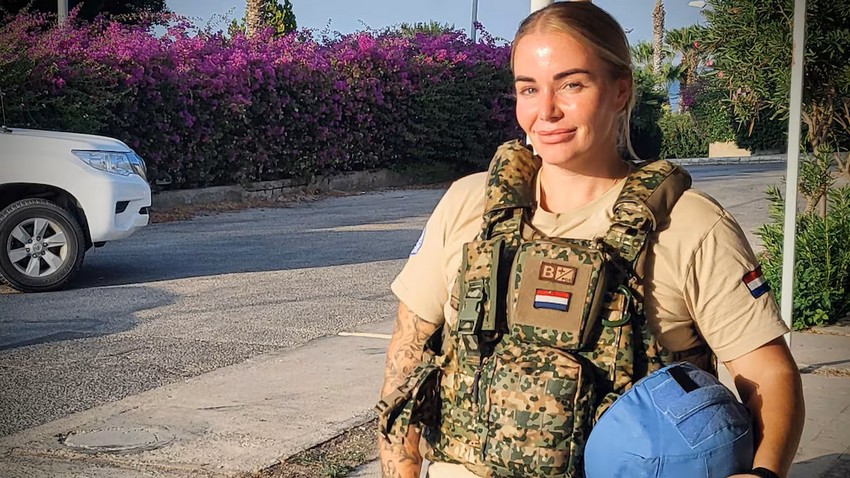
At that time, Mandy was stationed in Naqoura as a military gender advisor for the United Nations Interim Force in Lebanon (UNIFIL).
But the events in Israel on October 7, 2023 changed everything. On the urgent advice of the Dutch military attaché in Beirut, we had to cancel both group trips. That decision had a major impact. For many participants, the suitcases were already ready. After forty years, they would finally return to Lebanon —a journey full of memories. Whether we will ever be able to make them together remains uncertain.
For Mandy, a difficult and intensive time began in the same period. The threat increased sharply in a short time. About her mission and her personal experiences, she wrote the book Blue Shards – How to stand up as a woman in the violence of war. In this interview, Bert Kleine Schaars talks to her about her work, the tensions on the ground and the strength needed to survive in a conflict zone.
When did you hear that you might be sent to Lebanon to participate in UNIFIL?
Around June 2023, it became clear that I would be deployed to the United Nations Interim Force in Lebanon (UNIFIL) as a Military Gender Advisor and Senior National Representative. From that moment on, things went fast: preparing, reading, having conversations and mentally switching to a year in southern Lebanon. Preparing is something you do on your own.
What was your age at the time of departure?
I was 32 years old when I left at the end of 2023.
Were you familiar with the previous efforts of the Dutch (1979–1985)?
Yes. The Dutch contribution to UNIFIL in the period 1979–1985 is still part of our collective memory within the Ministry of Defence. I was aware of the intensity of that mission, the sacrifices that were made and the impact it had on soldiers and their families. That realization travels with you.
What was your first impression of Lebanon as a country and its people after arriving?
My first impression of Lebanon was its enormous layering: a beautiful landscape with sea, mountains and villages, next to visible scars from previous conflicts. What touched me most was the warmth and dignity of the population. Despite the economic crisis and political instability, I tasted pride and resilience.
Has that impression changed since then?
Deepened, rather than modified. I saw how vulnerable the situation really was and how quickly safety can change. But my respect for the population has only grown. You learn to look beyond the news image and see people trying to live their lives normally under extraordinary circumstances.
Did you have a good transfer from your predecessor?
Given the already escalated security situation, the transfer was as careful and complete as was possible at the time. I had a transfer with Annelies, my predecessor, for three days. An intensive transfer. At the same time, you notice that the reality of a mission area cannot be fully conveyed on paper or in conversations. Only when you are there yourself — in the context, under the threat and within the dynamics of the area — do you understand what that really means. You also have to go through that process personally; It's not something you can pass on one-on-one to your successor.
What was it like to work as a 'one-man' with broad commitment in a multinational environment?
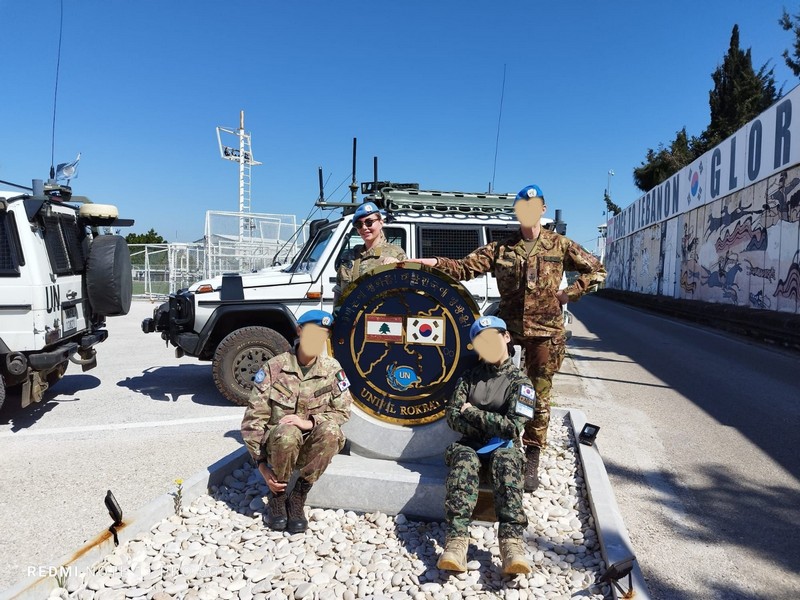
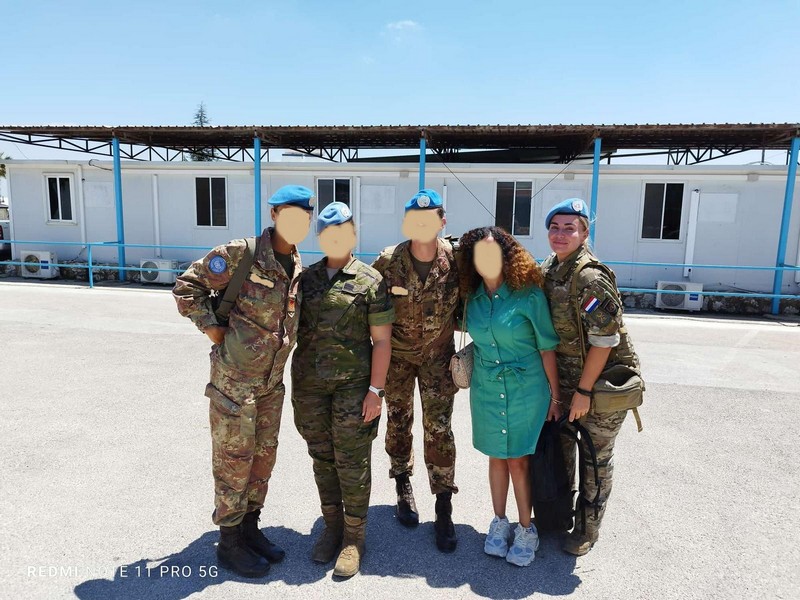
The headquarters in Naqoura is a melting pot of nationalities. As the only Dutch officer with a dual role, I felt responsibility in two directions: towards the UN structure and towards The Hague. Working with so many cultures enriches you enormously, but also requires diplomacy, patience and constant coordination.
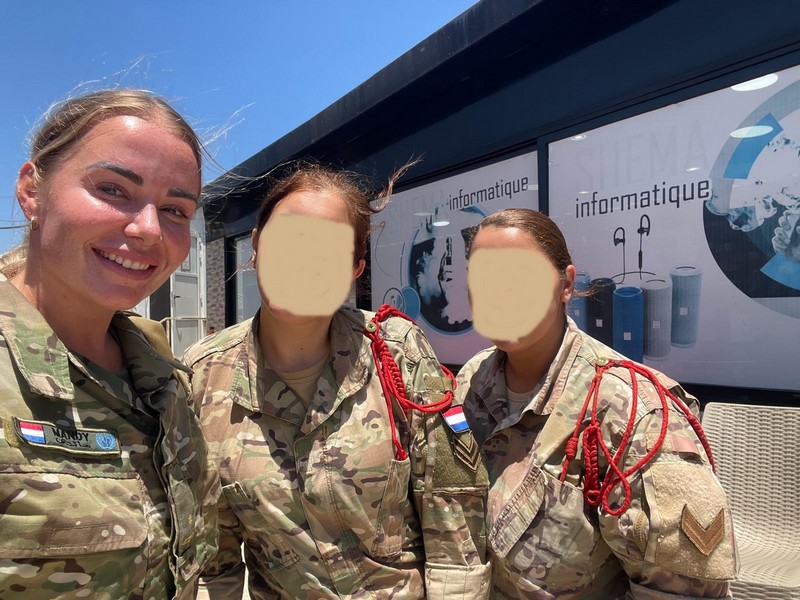
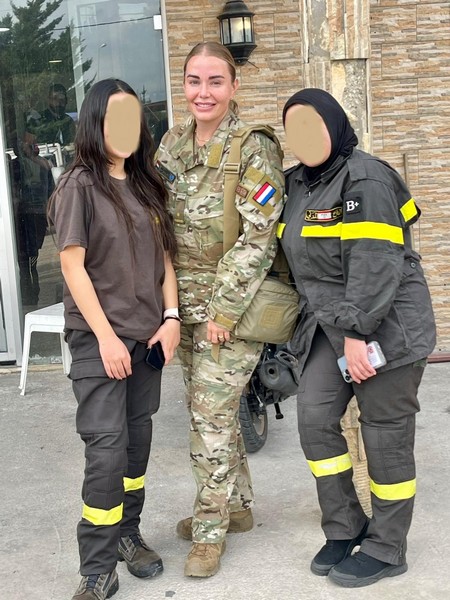
I was lucky that two more 'one-man people' started their mission at the same time as me: a soldier from Estonia and one from England. You then automatically form a kind of trinity that spends more time together. You find support in each other, especially at times when the threat became physically felt through explosions in the vicinity. Then you often stayed together in the bunker for a long time.
What did you initially notice about the threat between Hezbollah and Israel?
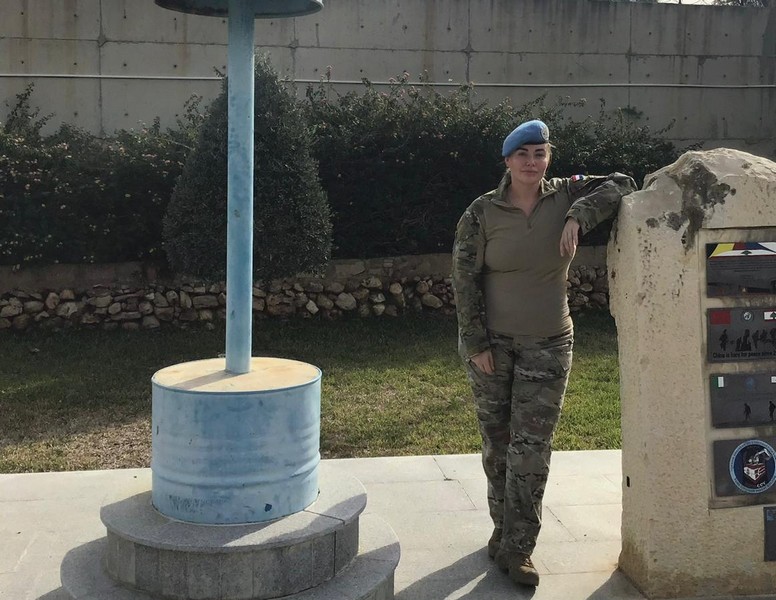
I arrived in early December 2023 and immediately stepped into a situation where the level of violence was already high. The threat was palpable and structurally present in everything from day one: in security procedures, freedom of movement and the way of working. At the same time, despite the violence, the situation in that first period was still workable within the mandate and the existing structures.
In the course of 2024, the intensity and unpredictability increased further. Where it was initially still possible to carry out tasks within clear frameworks, that space became smaller and smaller. The heightened threat directly impacted daily routines, decision-making, and priorities, and made the work more complex and onerous along the way.
How did your daily routine and mission change after escalation?
Because I immediately started in an already escalated situation, my mission had a high level of tension from the start. In the first months, despite the violence, there was still room to work on my core tasks and to build relationships within headquarters and beyond.
As 2024 progressed and the security situation deteriorated further, my daily routine shifted more and more towards crisis management and continuity. Freedom of movement became more restricted, consultation became more urgent and priorities were more emphatically on safety and coordination. The mission became less plannable and more reactive, which has both a professional and personal impact.
Were you still able to continue your tasks or did the structure of your position change?
My position as Military Gender Advisor — safeguarding the gender perspective within a UN peacekeeping mission — is essentially focused on the protection of civilians, inclusive decision-making and strengthening local networks. In a classic peacekeeping setting, you work on long lines: policy, training, advice and building trust.
In a situation where the level of violence is rising sharply and an Israeli invasion of Lebanon is taking place, the dynamics shift substantially. The space for structural construction is becoming smaller and safety is logically given priority. Nevertheless, the gender perspective remains relevant, perhaps even more urgent, because it is precisely in escalations that women, children and vulnerable groups are disproportionately affected. So the form changed, but the core of the task did not. Due to the circumstances, the connections with other contacts of the mission were often poor and communication was difficult.
What did the real-time reporting and propaganda do to you and your home front?
Whereas previous generations of soldiers were relatively 'out of the picture', this mission took place in an era of social media and continuous news provision. Every explosion, every movement, became visible almost immediately — often framed from different interests.
That had an impact. Not only professionally, in terms of image and interpretation, but certainly also privately. My home front was able to follow what was happening in southern Lebanon in almost real time. This increases involvement, but also tension. Sometimes they saw images before I could have fully placed them myself. This requires a lot of mutual communication and trust, which became even more difficult as the communication possibilities in southern Lebanon largely disappeared.
Was your mission extended by the changed circumstances? What did that do to you?
My mission was extended by a few weeks, because I simply couldn't leave. The circumstances also made the period more intensive than anticipated. The increased threat and the continuous alertness make time feel different. A year in a stable setting is different from a year in an environment with a lot of violence. This requires a lot of resilience, but also gives a keen sense of responsibility.
How do you look back on the completion of your mission and the aftercare?
The transition from the mission area to the Netherlands was abrupt. In the case of larger contingents, aftercare is often embedded in a more structured way. As a 'one-man' with a broad, independent position, I noticed that this bedding is less obvious. I would have liked a real substantive debriefing and a quiet phasing out period differently.
I know that many UNIFIL veterans from 1979-1985 will recognize this. A lot has been learned within the Ministry of Defence in the field of aftercare, but my experience is that small-scale placements can sometimes fall between two stools. This does not mean that the intention is lacking, but it does mean that the impact of a mission in Lebanon — also geopolitically — is sometimes underestimated when small numbers are involved.
How are you now? What has this mission meant for your personal development?
I'm doing well. The mission has sharpened me: in my professional convictions, in my leadership and in my view of humanity. I have experienced how thin the line between stability and escalation can be and how important humanity remains under pressure.
I live more by the day and am less focused on constant control. When I look around me, I see how good we have it here and how privileged we are. That is humbling, especially when I think of the resilience of the Lebanese.
Personally, it has made me more aware of my limits, but also of my resilience. Looking back, I see an intense year that has shaped me — not only as a soldier, but especially as a person.
Interview Averlo, 24 February 2026
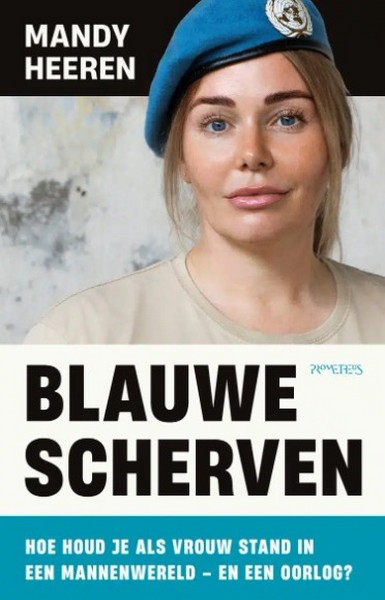
Mandy's book can be ordered from Prometheus publishers for €22.99.
https://uitgeverijprometheus.nl/boeken/blauwe-scherven-paperback/